, updated
Fourteen Psilocybe cubensis strains grown the same way differed almost tenfold in psilocybin
A study published July 2, 2026 in the Journal of Fungi measured six tryptamines in 14 Psilocybe cubensis strains grown, dried and analyzed under the same conditions. Psilocybin content varied 9.66-fold between strains, and single mushrooms of the same strain differed with coefficients of variation from 12.81% to 23.39%.
What the researchers did
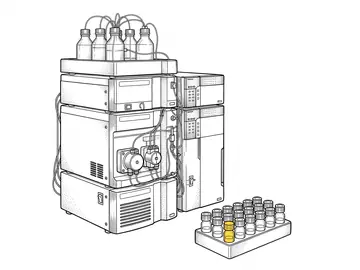
Sharchaton and colleagues quantified psilocybin, psilocin, baeocystin, norbaeocystin, aeruginascin and norpsilocin in fruiting bodies of 14 strains, each confirmed as P. cubensis by DNA barcoding (ITS).1 The strains were grown, dried, extracted and analyzed under uniform laboratory conditions: freeze-dried, then measured by HPLC, with at least three technical replicates of pooled powder per strain.1 That design removes the usual explanations for differences between samples, such as substrate, drying method or lab technique.
What it found
Total tryptamines ranged from 2.62 mg/g in Oak Ridge light to 20.65 mg/g in Mak IND of dry weight, a 7.88-fold spread (the authors describe it as "more than 7.8-fold"). Psilocybin alone ranged from 2.03 to 19.60 mg/g, a 9.66-fold spread by our arithmetic from Table 1, and was the dominant compound in every strain. Psilocin ranged from 0.11 mg/g (Enigma) to 1.77 mg/g (Penis Envy) where detected; norpsilocin and norbaeocystin were mostly below the detection limit.1
| Strain | Psilocybin | Total tryptamines |
|---|---|---|
| Mak IND | 19.60 | 20.65 |
| Penis Envy | 15.49 | 17.59 |
| Sat | 13.53 | 14.36 |
| Jedi Mind Fck | 11.58 | 12.70 |
| Albino Penis Envy | 11.38 | 12.33 |
| Jack Frost x Golden Teacher | 11.03 | 11.38 |
| Enigma | 7.91 | 8.11 |
| Jack Frost x Shakti | 6.75 | 7.29 |
| Xico | 6.22 | 7.10 |
| Mal | 5.62 | 6.34 |
| Jack Frost | 4.95 | 4.95 |
| Z+ | 3.24 | 3.24 |
| SE Houston | 2.28 | 2.97 |
| Oak Ridge light | 2.03 | 2.62 |
In six of the strains, the team also analyzed single fruiting bodies, five per strain, from the same chamber and stage. Psilocybin's coefficient of variation between single mushrooms ran from 12.81% (Mal) to 23.39% (Jack Frost x Shakti). In Jack Frost x Golden Teacher, single mushrooms ranged from 6.81 to 12.38 mg/g.1
What a strain name can and can't tell you
The strain names are the names the cultures came with, which the authors checked against each strain's appearance; they note the absence of a comprehensive genetic reference database for these strains.1 A 2023 genome study of 86 commercially available P. cubensis cultivars found low genetic diversity, with alleles in the psilocybin gene cluster "identical across most cultivars", though some cultivars carry unique alleles that "may translate to differences in biosynthesis".3 An earlier study found a smaller gap: five strains from one supplier differed 1.55-fold in psilocybin plus psilocin.2 Sharchaton and colleagues conclude that variation between and within strains persists "even under controlled conditions".1
Why it matters for potency numbers and calculators
A dosage calculator that adjusts by strain assumes a strain name predicts potency. Here, strains raised side by side differed almost tenfold, and single mushrooms of one strain still differed from each other. Neither difference shows up in a name or on a scale. In our audit of 36 online calculators, 11 state the potency they assume and 19 warn that potency varies. Our strain potency guide sets this study beside earlier ones.
These were freeze-dried lab samples measured under controlled conditions, so the table describes these samples, not any product on sale.
Sources
- Sharchaton A, et al. Surprising Variability in Tryptamine Profiles of Psilocybe cubensis Fruiting Bodies: Inter- and Intra-Strain Differences Across 14 Strains Cultivated Under Controlled Conditions. J Fungi 2026;12(7):486, July 2, 2026. PMID 42506248. Full text: PMC13412672.
- Goff R, et al. Determination of psilocybin and psilocin content in multiple Psilocybe cubensis mushroom strains using liquid chromatography tandem mass spectrometry. Anal Chim Acta 2024;1288:342161. PMID 38220293.
- McTaggart AR, et al. Domestication through clandestine cultivation constrained genetic diversity in magic mushrooms relative to naturalized populations. Curr Biol 2023;33(23):5147-5159. PMID 38052161.
Keep reading
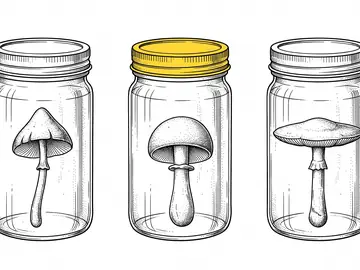 Which magic mushroom strains are strongest? What lab tests showLab results for 14 cubensis strains, Penis Envy and Golden Teacher, and why a strain name isn't a potency.
 Psilocybin potency: every magic mushroom lab measurement we could findPsilocybin measured in mushrooms, from 42 published sources, shown as ranges, with a free dataset to download.
 We checked 36 online mushroom dosage calculators: what they ask, what they leave out36 calculators checked: what they ask for, what they skip, and who runs them.
Written and checked by the Dosage Calculator editors. Every figure on this page links to its source. Found an error? Tell us and we'll correct it in the open, as our editorial standards describe. Magic Mushroom Dosage Calculator is published by the team that runs My Mushroom Dispensary, an online shop. We sell no advertising and nothing on this site.